Nikkei ScoutAsia
Transformation
ScoutAsia is a KYC and news-monitoring platform, and by 2020 it was underperforming.
Conversion was low, positioning was unclear, and there wasn't a consistent answer to a basic question: what does this product actually do for you?
Client
Nikkei ScoutAsia,
Handshakes
Year
2020
Role
Product Lead
UX Designer
Team
1: Lead UX/Product Designer
2: Junior UX Designer
Focus
Product Strategy and Experience Design
Transformation and Product Re-positioning
I proposed the transformation, built the strategic case behind it, then led the execution with my product team through to a company-wide pitch and rollout.
Nobody assigned me this project. I discovered the gap, built a case for fixing it, and took it to leadership.
The proposal became a fully endorsed roadmap within three months.
Three projects have shipped from it to date: Radar V1.0, Library V1.0, and a redesigned onboarding and dashboard experience. The full transformation spans three to four years and remains in execution.

Positioning was the real product
The cause wasn't the product itself. Business and product teams across Japan, Australia, Singapore, Europe, and Hong Kong were each pitching ScoutAsia differently, despite selling to similar customers. The organization hadn't agreed internally on what it was selling. Fixing that came before any feature work could matter.
I identified this, built the case for addressing it, and took the proposal to leadership.
5 Regions
aligned to one product roadmap
3 of 3 Milestones
shipped on schedule
I led design, strategy, and the pitch that got it approved
I proposed the transformation and built the strategic case behind it. I led a two-person team, a junior designer and myself, directing execution through to a company-wide pitch and rollout. From there, I led roadmapping with the product team as we began rolling out milestones.


Six recurring themes, straight from users
Research came first. We mapped ScoutAsia's existing features, tools, and assets, then gathered feedback from users and stakeholders across every region.
That surfaced six recurring themes: too many clicks to reach value, content too dense to skim, alerts that didn't reflect what was new, curation criteria users couldn't make sense of, inconsistent filters, and exported data too poor to justify subscribing.

Where the problem actually sat
Those granular themes pointed to something bigger. ScoutAsia's purpose wasn't clear, even internally. The value proposition wasn't obvious. The product was underutilising the data and news it already had, and underselling the technical capability behind it. Users had genuinely different needs by role, but the product treated them all the same. Fixing the small usability issues wouldn't matter until this was fixed first.
Intelligence & Forward
ScoutAsia does not look/feel ‘Smart’, you cannot convince users that we are technically capable if they can’t see it.
Unique Selling Point
We need to be clear on
ScoutAsia's unique selling point, there is no where on the platform that we can pinpoint.
Personalise & Customise
ScoutAsia is too generic. There is no clear purpose.
Our users have different profiles, hence different needs – they only need what is relevant to them
Collaboration, Integration & Analysis
As a corporate tool, we should integrate into our corporate users' workflow, creating an environment within ScoutAsia where teams can work together
Content, Quality, & Resources
We are
underutilising the data and news that we have, thus missing out on the value we can give to our users.
Five insights, five directions of potential
That surfaced five clear strengths the product already had, capability, intelligence, and depth it could genuinely deliver, none of which came through on the product itself. ScoutAsia wasn't underpowered. It was underselling itself.
One product, four very different users
From there, I redefined ScoutAsia's personas, breaking down a generic user base into distinct roles, each with different goals, needs, and pain points, so the product could speak to each one instead of all of them at once.


Mapping where the real opportunity sat
The customer journey end to end was remapped to the users' full workflow, layering in what each stage was actually doing for the business and where the opportunities sat.
I also work with my CEO to shift the business model pricing from a single flat rate to a tiered model, so organisations paid for what they used. That shift also surfaced capabilities that had been buried in the old structure, and gave the business a lever it didn't have before: different pricing tiers aligned to different personas, rather than one undifferentiated product for everyone.

Slower can be the safer bet
Leadership wanted fast results. The underlying problem was structural, not cosmetic, so I made the case for a phased, multi-year roadmap instead of a full rebuild. Each phase was prioritized against three factors: implementation effort, growth impact, and competitive positioning. The overall strategy was then split into discrete projects, each owned by a product manager, all converging on the same direction.
That call set the pace the business is still executing against today.
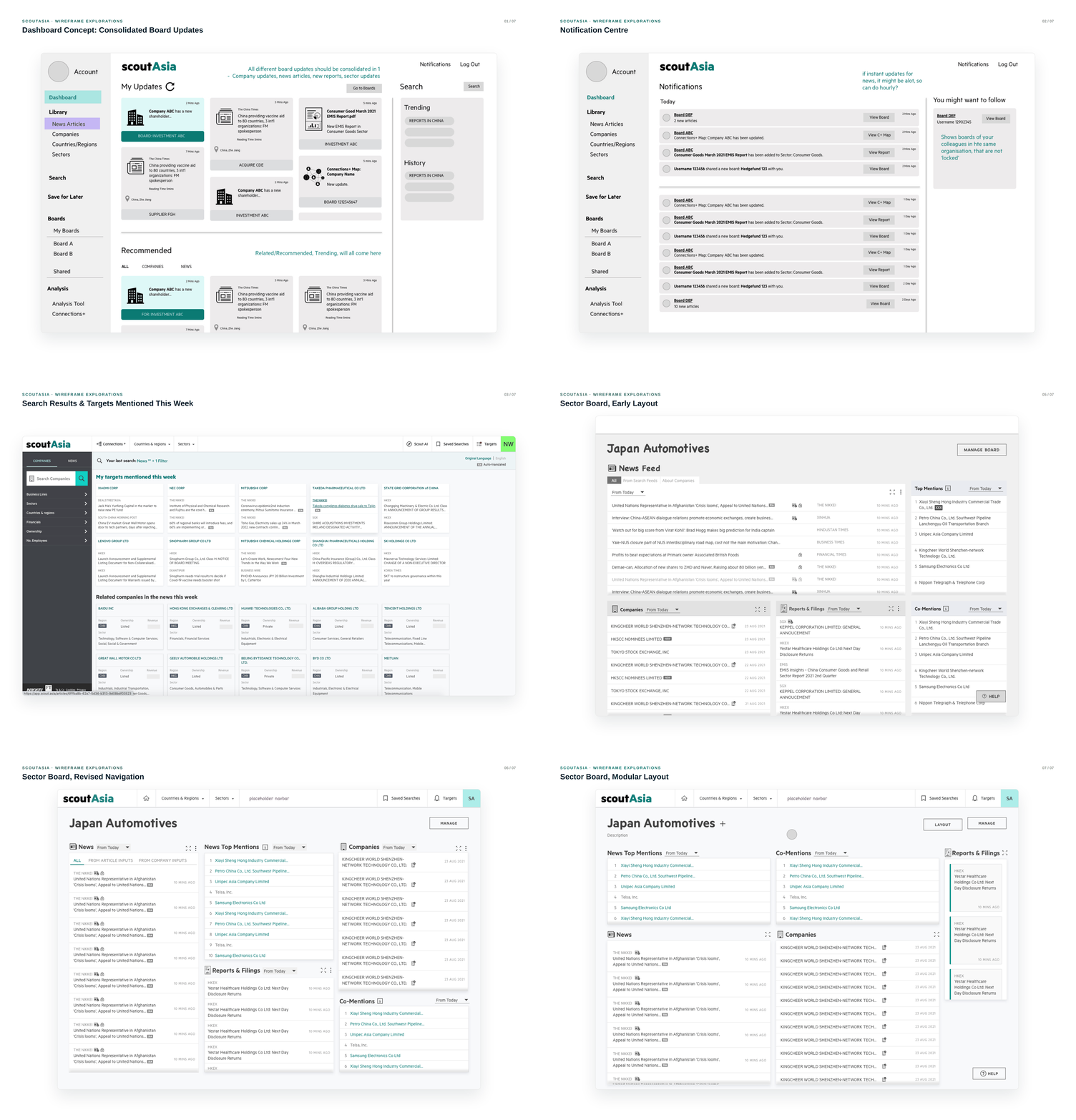
Exploration, iterating through the details
Wireframing was a team effort. I directed the explorations and worked hands-on alongside the junior designer through several rounds, from an early rough dashboard concept to a modular, near-final layout. Each pass tightened the navigation, cut repeated data, and moved us closer to what eventually shipped.
55% increase in Retention
Users continued using the product regularly after 60 days
22% increase in Trial to Paid Users
After the introduction of the Radar V1
Where it stands
The lasting result is strategic. Handshakes now approaches ScoutAsia's product and business direction through a defined roadmap, clear personas, and pricing aligned to actual customer needs, rather than a single undifferentiated offering.